Unlocking the Power of Cold Water Kelp Extract
The right biostimulant can turn a decent spring into a strong one. When roots wake up, days get longer, and soils are still cool and jumpy, plants need more than plain fertilizer. They need help using what is already there, so every pound of nutrient goes further and plants stay steady as the weather swings.
That is where cold water kelp extract steps in. The kelp species Ascophyllum nodosum, pulled from the cold North Atlantic, has become a favorite for growers, turf managers, and serious gardeners. It brings natural compounds that support growth, balance, and stress tolerance when it matters most, from early leaf-out through the first real heat of summer.
What Makes Ascophyllum Nodosum so Special?
Ascophyllum nodosum lives in a tough neighborhood. Along the rocky coast of Maine, it is exposed at low tide and pulled under at high tide, over and over, in cold, salty water. One moment it is in bright sun and wind, the next it is underwater in frigid waves. To survive, it has to be tough, flexible, and efficient.
That harsh coastline shapes the plant material we work with. Ascophyllum builds up a dense mix of natural compounds, including:
- Alginates that help with water holding and soil structure
- Mannitol, a natural sugar alcohol that supports nutrient movement
- Vitamins and amino acids that support plant metabolism
- Phytohormone-like compounds that influence growth and stress response
These are not just nice extras. They are part of how this kelp handles constant stress. When we bring those same compounds onto land, they help crops, ornamentals, and turf handle their own stress.
Not all kelp is alike. Warm-water seaweeds often grow in calmer, less extreme conditions, which can mean a different balance of compounds. Lower-grade raw materials may be dried or stored in ways that damage delicate bioactives before extraction even starts. With Ascophyllum nodosum from cold North Atlantic waters, we start with a plant that has already proven its strength in a demanding environment.
Cold Water Kelp Extract and Plant Physiology
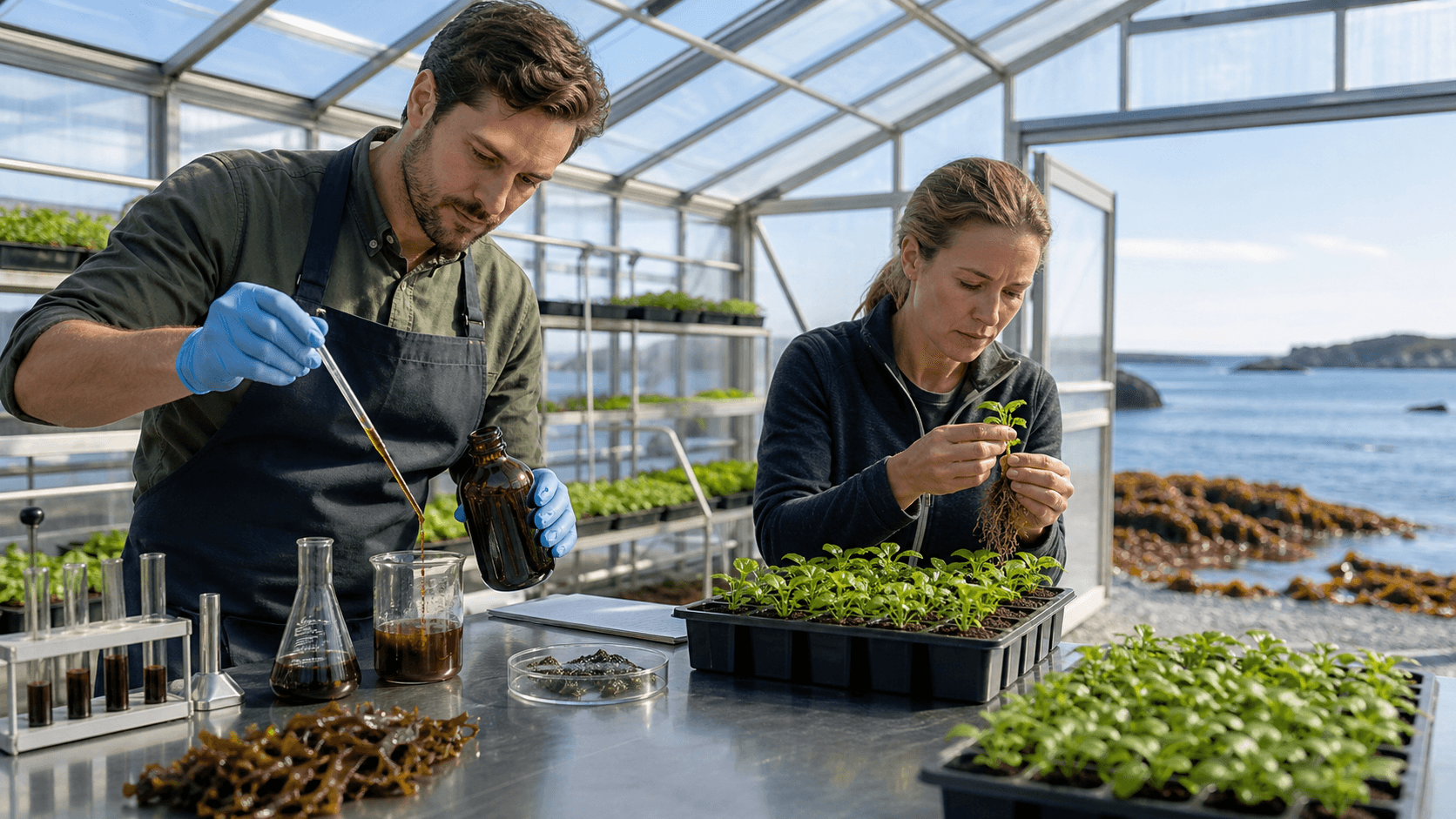
When we talk about cold water kelp extract, we are really talking about plant physiology. The goal is not to push plants to grow too fast. It is to help them grow smarter, with stronger roots and better balance between shoots, roots, and stored energy.
Here is how Ascophyllum-based extracts support that:
- Root development: Compounds that act like natural growth regulators encourage fine root hairs and branching, which increase the root zone that can explore soil.
- Stronger cell walls: Better nutrient use, along with natural calcium movement, supports thicker, more resilient tissues.
- Balanced growth: Instead of soft, stretched growth, plants tend to fill in with compact, steady development.
Cold water kelp extract pairs especially well with spring fertilizer programs. Nutrients are important, but they only help if plants can take them up and use them. By supporting root function and natural hormone pathways, Ascophyllum nodosum helps plants:
- Take up nutrients more efficiently
- Hold color and density without heavy growth spikes
- Recover faster after stress, such as mowing or trimming
Stress support is another key role. Spring and early summer can bring wide temperature swings, heavy rain one week, dry wind the next. Transplants can struggle as they move from protected trays into open ground. In some soils, salt or low moisture can hit roots at the worst time. The bioactive compounds from Ascophyllum help plants stay more stable through:
- Fluctuating temperatures
- Transplant shock
- Salinity issues in soil or irrigation water
- Short dry spells between rains
From Ocean to Application: How Extraction Methods Matter
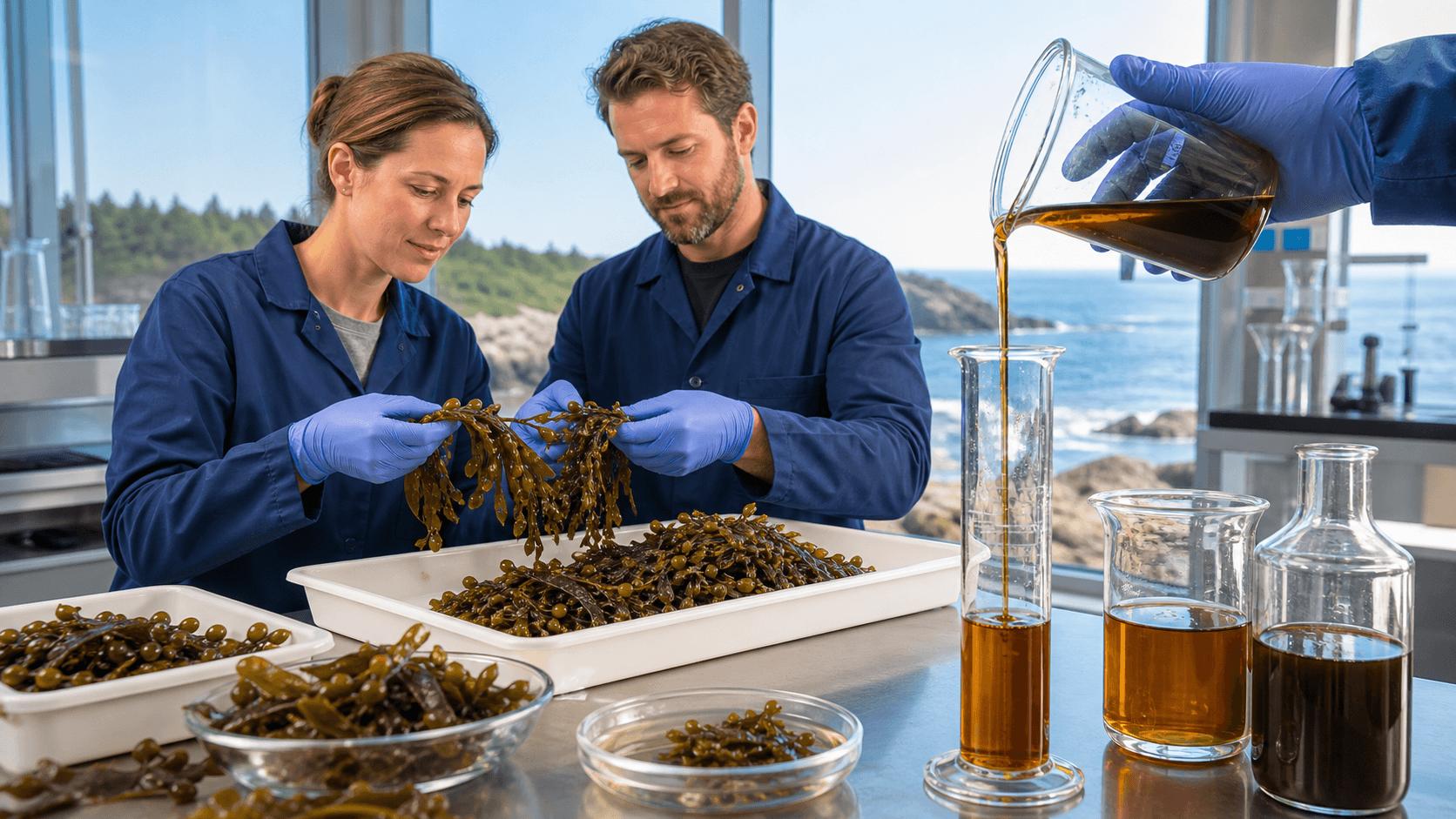
What we do with the kelp after it leaves the water matters just as much as how it grew. Many of the helpful compounds in Ascophyllum are delicate. High heat or harsh chemicals can damage or break them apart. That is why extraction methods are such an important piece of the story.
Gentle, low-temperature extraction keeps the natural profile closer to what existed in the living kelp. That means:
- More intact phytohormone-like compounds
- Better preservation of vitamins and amino acids
- Less damage to alginates and natural sugars
On the other hand, processes that rely on high heat or strong chemicals can give a liquid product, but with fewer active compounds that actually affect plant performance.
At BioXtreme, we focus on cold-process, professional-grade liquid seaweed extracts. Working along the Maine coast, we know that how we treat the resource shows up in real-world results for fields, greens, and gardens. We are careful with each step so the complex mix built by the ocean is still present when it reaches your spray tank or irrigation system.
Sustainability and quality tie together here. Responsible hand harvesting and careful handling protect the coastal ecosystem where Ascophyllum grows. They also give us consistent, traceable material with the characteristics growers count on season after season.
Real-World Wins for Fields, Greens, and Gardens
Cold water kelp extract shows its value when conditions are less than perfect, which is most of the time in late spring. Young transplants in vegetable beds, annual color in planters, new turf seedlings, and recovering fairways are all under pressure to establish quickly.
Many managers and serious gardeners work kelp extract into key moments like:
- Transplanting seedlings into beds or containers
- Seeding or overseeding turf in cool, moist soils
- Early flower and fruit set as days warm up
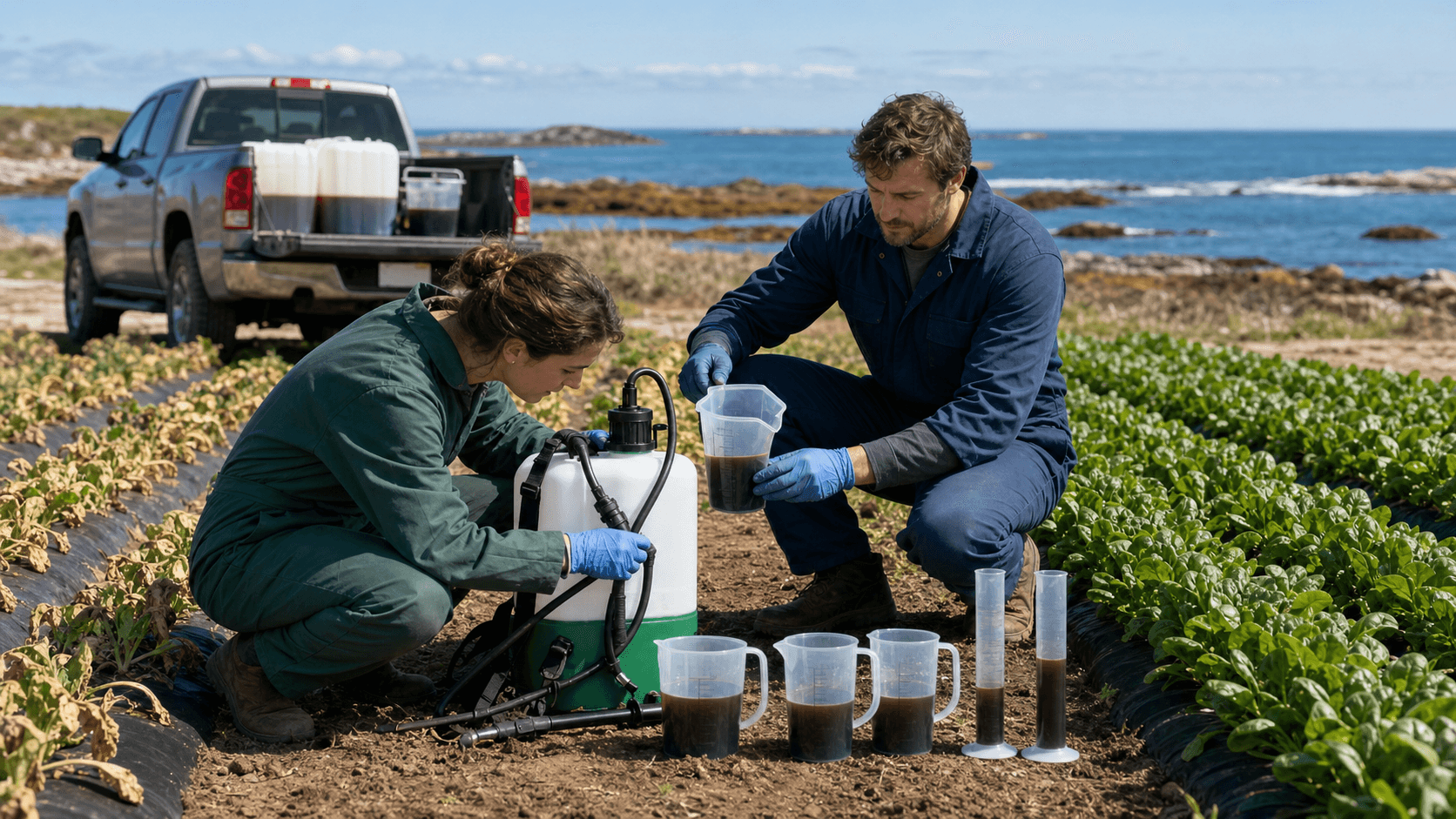
Foliar sprays can help foliage stay greener and more resilient after mowing or trimming. Root drenches and injection into irrigation lines can support rapid root growth, which is the foundation for better water use and nutrient efficiency. On high-value turf, regular light applications support:
- Improved early root mass and rooting depth
- Better color and density without excessive top growth
- Reduced visible stress after traffic, play, or mowing
- More uniform growth in mixed soils or tricky microclimates
In crop settings, that same steadying effect can lead to more even stands, better recovery from short weather shocks, and smoother transitions between growth stages.
How to Start Using Cold Water Kelp Extract This Growing Season
Adding cold water kelp extract to an existing fertility program is usually about timing and consistency, not big changes. Most growers and turf managers weave it into what they already do instead of replacing other tools.
General ways to start include:
- Pairing with early spring fertilizer applications
- Using it in the tank mix for transplant water or starter sprays
- Adding it to irrigation at key growth stages
- Scheduling light, frequent passes rather than one heavy shot
Rates and formats will vary depending on whether you manage sports fields, golf greens, commercial crops, or an intensive home garden. Professionals tend to favor liquid formats that blend easily in spray tanks and feeding systems, which keeps labor and application simple.
As a Maine-based producer of premium liquid seaweed extracts, we at BioXtreme see every season along this coast remind us how powerful and demanding cold-water environments are. Ascophyllum nodosum thrives here, and through careful extraction, we can share some of that resilience with your plants. When spring turns into early summer and your turf, crops, and ornamentals are facing real stress, the right cold water kelp extract can help them respond with stronger roots, steadier growth, and performance you can see.
Unlock Stronger Growth With Proven Seaweed Science
If you are ready to support plant health with research-backed inputs, explore how our cold water kelp extract fits into your program. At BioXtreme, we focus on clean, consistent formulations that are easy to integrate into existing nutrient regimens. Our team is available to help you dial in rates, timing, and compatible products for your specific crops. Have questions or need tailored recommendations, simply contact us and we will walk you through the next steps.