Get More From Every Drop of Liquid Seaweed
Getting your seaweed fertilizer application rate right in spring is one of those quiet moves that sets up the whole season. Plants are waking up, roots are active, and soil life is kicking into gear. If rates are off now, you can see the effects for months in weaker roots, uneven color, or stress that shows up right when heat or wear hits.
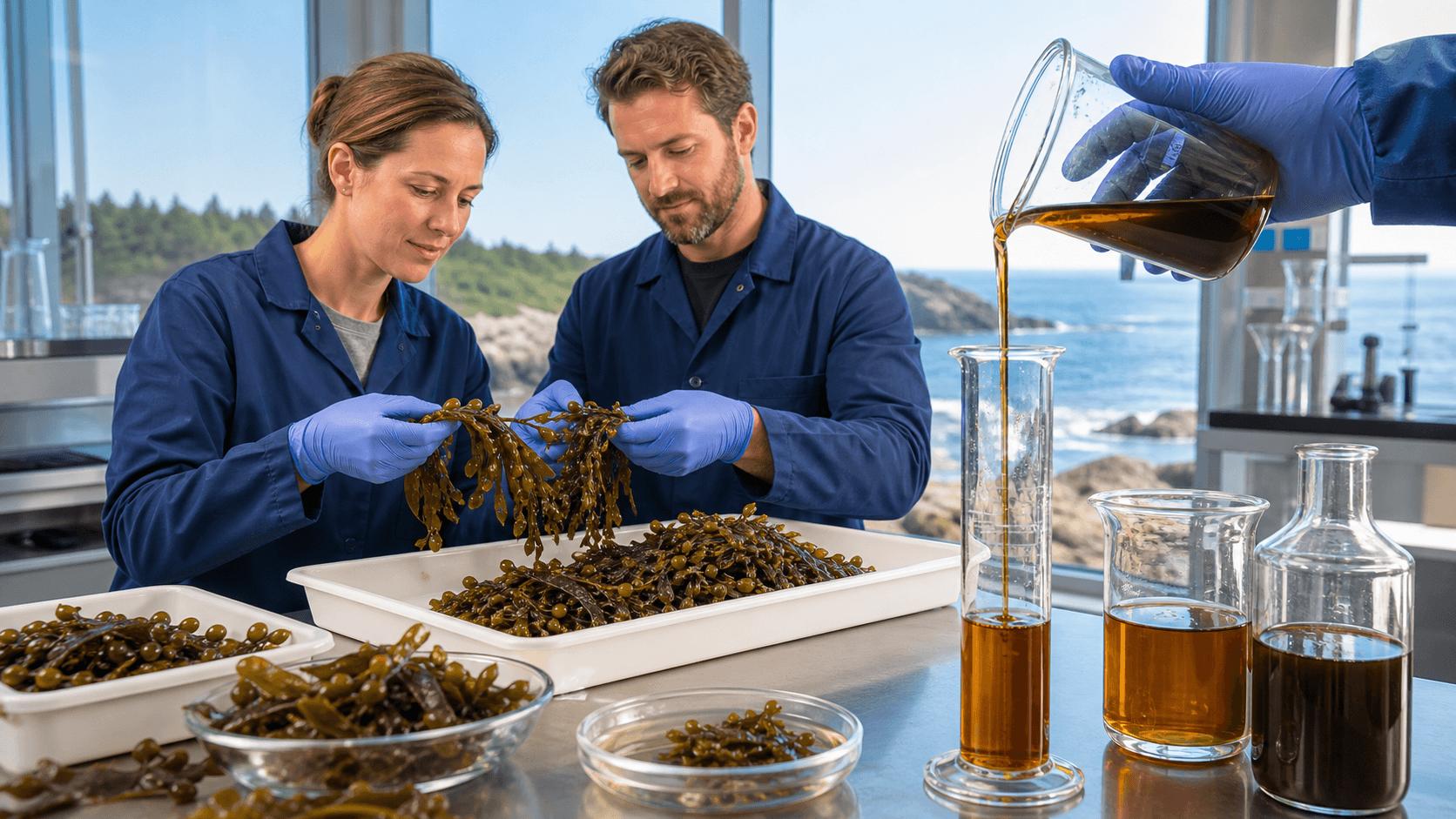
Liquid seaweed is not just another jug in the shed. It is a powerful tool that rewards careful use, not guesswork. At BioXtreme, we work with Maine-harvested Ascophyllum nodosum, and we see every day how precision with rates leads to better performance for crops, turf, and serious home gardens. In this article, we will walk through common mistakes with seaweed fertilizer application rate, and how to build a simple, repeatable program that fits what you grow.
Why Seaweed Rates Matter More Than You Think
Liquid seaweed works differently than a standard NPK fertilizer. Instead of just feeding plants, it brings natural compounds that talk to the plant. These include plant hormones, trace elements, and other biostimulants that support root growth, stress response, and how well plants use the nutrients already in the soil.
Because it acts on plant signaling, the rate you choose really matters.
- Too little and you leave performance on the table.
- Too much and you can upset the plant, stress the system, or simply waste product.
- Just right and you get smoother growth, stronger roots, and better response to your whole fertility program.
Professional-grade seaweed extracts are often more concentrated than the retail bottles many people start with. That means label rates are not suggestions you can casually swap between products. Copying something you saw online or using the same rate across all jugs can easily push you into over or underapplication without even realizing it.
The Hidden Costs of Overapplying Liquid Seaweed
In spring, it is tempting to pour on the inputs. Growers and turf managers stack full NPK, maybe some foliar feeds, and then top it off with a heavy dose of seaweed, just to be safe. Before a storm, a big play weekend, or a key growth push, it is easy to think, "More has to be better."
Overdoing it can backfire. When liquid seaweed is piled on top of hot fertilizer mixes, you can see:
- Leaf burn when the spray solution gets too salty or too loaded
- Hormonal stress that slows growth instead of supporting it
- Wasted volume per acre or per 1,000 square feet with no added benefit
A smarter move is to work at the low end of the recommended range at first. Once you see how your crop or turf responds, you can adjust frequency instead of cranking up the rate. Often it is better to run a moderate rate more often around key stress points like transplant, pruning, drought, or heat waves. This gives the plant steady support rather than one giant push that may not match what it can use.
Underapplication That Leaves Yield and Quality Behind
On the other side, some people treat liquid seaweed like an insurance policy. They spray a light rate once in early spring, feel good about it, then expect season-long benefits. For high-value crops or intensively managed turf, that single "insurance pass" is not doing much.
When seaweed use is too light or too rare, you miss:
- Extra root mass that helps with water and nutrient uptake
- Stronger stress resilience when the weather or traffic turns rough
- Better use of applied NPK, which can show up as fuller yield, deeper color, and more even stands
Seaweed works best as a program, not a one-off. Think in stages: a pass before or at planting or green-up, a pass during early vegetative growth, then another as you head into known stress windows like heat, heavy traffic, or flowering. Consistent, moderate rates at these times build on each other and support both plant and soil biology.
Label Confusion and Mixing Rates Across Products
A lot of rate problems start with the label. It is easy to mix up per-acre and per-gallon numbers, or to forget that different seaweed products do not share the same concentration. Greenhouse rates can also look very different from field or turf rates.
Common mix-ups include:
- Using a rate meant for a weaker retail seaweed on a stronger extract
- Taking a greenhouse rate and using it outside on acres or large turf areas
- Reading the per-gallon number but ignoring the total water volume per acre
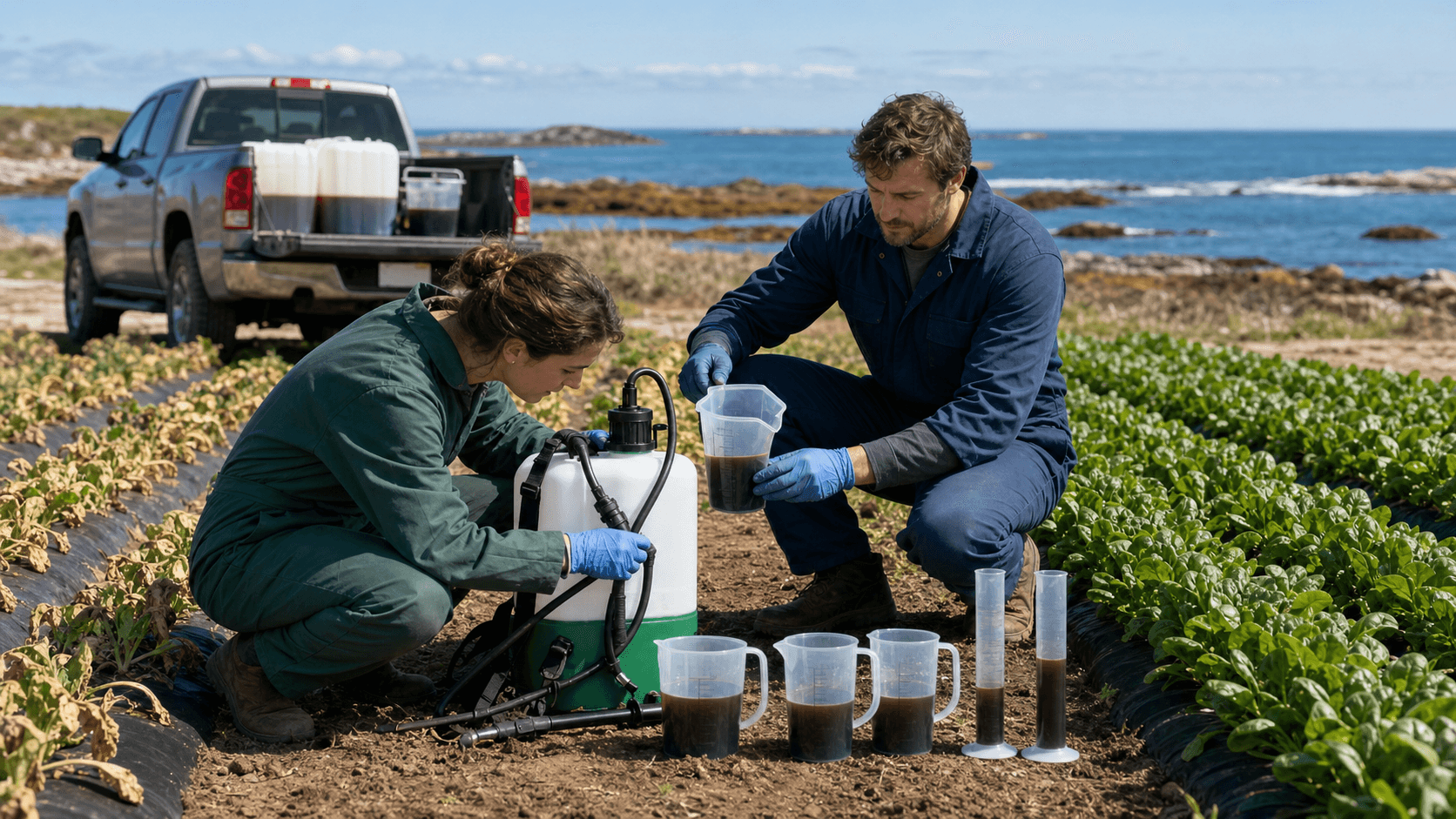
Before any spray or injection, build a quick rate-check habit:
- Confirm the product concentration on the label
- Double-check that you are using the right rate unit (per acre, per 1,000 square feet, or per gallon)
- Match the rate to your planned water volume
- Run the math one more time before filling the tank or injector
This little pause is often the difference between a clean, efficient application and a pass that quietly wastes money or stresses plants.
Matching Rates to Crop, Turf, and Soil Conditions
Not every plant or field wants the same seaweed fertilizer application rate. A one-size-fits-all number across different crops, turf species, or soil types rarely works well. What makes sense on a sand-based green in late spring might be totally wrong for a heavier loam vegetable field.
Think about three big factors: crop stage, stress level, and soil biology. Newly transplanted plants or recently seeded turf often do better with smaller, more frequent doses to keep roots moving and help them settle in. Established, vigorous crops usually only need maintenance-level support unless a stress event is on the way.
If you are also using biological products, foliar nutrition, or fertigation, rates might shift again. The goal is to support soil biology, not overwhelm it. As soil temps rise, life in the soil speeds up, and a steady, moderate seaweed program can work alongside that natural activity instead of fighting it.
Seasonal Timing, Consistency, and Competitive Advantage
Early to mid spring is when many fields and turf areas around Maine and beyond really start to push. This is a perfect time to run consistent biostimulant support rather than wait until stress shows. One common mistake is "burst and bust" timing: heavy seaweed use right before visible problems, then nothing for weeks.
A better seasonal rhythm might look like:
- Light but regular applications from green-up or transplant through early summer
- Slight increases in frequency around predicted stress periods like heat spells, traffic surges, or bloom set
- Returning to maintenance rates once plants are through peak stress
When rates and timing are tuned in, liquid seaweed becomes more than a nice add-on. It turns into a quiet edge that helps your program stand out. Stronger roots, smoother nutrient use, and tougher plants mean you get more from every pound of fertilizer and every hour spent on the field or in the garden. For growers, turf managers, and serious home gardeners, that kind of precision can be the difference between an average season and one you feel proud of.
Optimize Your Yields With Precise Seaweed Application
If you are unsure about the ideal seaweed fertilizer application rate for your crops, we can help you dial it in for healthier plants and better results. At BioXtreme, we combine research and field experience to guide you toward application strategies that fit your specific operation. Reach out to our team with your crop details and goals so we can recommend a tailored approach. If you are ready to discuss your needs directly, please contact us today.