Unlock Thick, Green Bermuda Grass Without Overusing Chemicals
Bermuda grass is a favorite for lawns, sports fields, and golf courses because it loves heat, laughs at heavy foot traffic, and recovers quickly from damage. When it is happy, it forms a tight, carpet-like surface with deep green color and dense coverage that crowds out most weeds. That combination of toughness and beauty is why so many property owners choose it.
The catch is that Bermuda also has a big appetite. Many people chase the perfect Bermuda lawn by piling on synthetic fertilizers, only to end up with thatch, disease, and more weeds, not to mention runoff that is tough on local waterways. In this guide, we will walk through how to choose the best fertilizer strategy for Bermuda grass and how natural tools like liquid seaweed lawn care can give you better color, thickness, and resilience while using fewer harsh chemicals.
What Bermuda Grass Really Needs to Thrive
Bermuda is a warm-season grass, which means it wakes up when soil warms, grows fastest in the heat, and slows or goes dormant as temperatures drop. It spreads aggressively by stolons that creep along the surface and rhizomes that run underground, so with the right care it can quickly fill bare spots. It responds strongly to nutrients, especially nitrogen, which is why it turns such a vivid green after feeding.
To keep that growth balanced, it helps to understand the key nutrients it uses most.
- Nitrogen gives Bermuda its deep green color and dense leaf growth.
- Phosphorus supports root development, especially in new lawns or when soil tests show a deficiency.
- Potassium helps the grass handle heat, drought, and disease, which is essential for high-use turf.
- Secondary nutrients and trace minerals support long-term turf health, helping enzymes and internal processes run smoothly.
Soil conditions are just as important as the fertilizer bag you choose. Bermuda prefers slightly acidic to neutral soil, with decent drainage and enough organic matter to hold moisture without staying soggy. A simple soil test can tell you your pH, organic matter level, and nutrient balance, so you can adjust lime, compost, and fertilizer rates instead of guessing. That single step can save money, reduce problems, and guide the whole program.
Comparing Fertilizer Options for Bermuda Lawns
Most Bermuda lawns are fed with granular synthetic fertilizers, organic or natural fertilizers, liquid supplements, or a blend of all three. Each approach has strengths and trade-offs, and the best plan usually uses them together in smarter ways.
Granular synthetic fertilizers are popular because they are easy to spread and give fast, visible results. Spread them correctly and you often see deeper color within days. The downside is that they can burn if overapplied, push very rapid top growth that needs constant mowing, and contribute to thatch and shallow roots. Heavy use can also increase watering needs and raise the risk of nutrients washing away.
Organic and natural fertilizers tend to release nutrients more slowly and steadily. They usually feed soil microbes, improve structure, and build organic matter over time. That creates better root zones and more resilient turf with less risk of burning or leaching. You may not see the same instant color surge, but the improvements in soil life and stability can be significant.
Liquid supplements and biostimulants come in as the fine-tuning tools. Products like liquid seaweed extract do not replace a core fertilizer program; they support it. Instead of simply dumping more nitrogen on the lawn, these products help the plant use what is already there more efficiently. They encourage stronger roots, better nutrient uptake, and improved stress tolerance so Bermuda looks better and stays healthier without always needing more synthetic inputs.
How Liquid Seaweed Boosts Bermuda Grass Performance
High-quality liquid seaweed is made from marine plants that are sustainably harvested, then processed into a concentrated extract. In our case at BioXtreme, that seaweed comes from the cold, clean coastal waters of Maine. The result is a natural liquid packed with trace minerals, organic compounds, and plant hormones that work with your turf instead of against it.
On Bermuda grass, liquid seaweed lawn care supports several key improvements:
- It encourages thicker, deeper root systems that access more water and nutrients, making the grass less dependent on constant feeding.
- It helps the plant use applied fertilizers more efficiently, which can support the same or better results with lower synthetic rates.
- It supports resilience to heat, drought, heavy traffic, and disease pressure, all of which are common on home lawns, sports fields, and golf course turf.
Liquid seaweed also supports soil biology, which is the living engine under your lawn. Healthier microbe populations help cycle nutrients, break down thatch, and keep roots healthier. Because it is a natural product and used in modest doses, it fits well in programs that aim to reduce heavy synthetic use while still maintaining high-performance turf that is safe for high-use areas.
Building a Bermuda Fertilizer Schedule That Actually Works
Bermuda responds best to a schedule that matches what the grass is doing in each season. It starts to green up as soil warms, hits its peak growth in the hottest months, then gradually slows as days shorten and temperatures drop. Local climate and region will shift the exact timing, but the growth pattern is consistent.
A simple way to think about your fertilizer plan looks like this:
- Spring: As the lawn greens up, aim for a light, balanced feeding. You are waking the grass gently and supporting root activity, not forcing a growth explosion.
- Early to mid-summer: This is the engine of the Bermuda season. A stronger emphasis on nitrogen supports density and color, especially on turf that takes a lot of traffic.
- Late summer: Start steering away from heavy nitrogen and focus more on potassium to support stress tolerance and prepare the grass for tougher conditions.
Liquid seaweed fits neatly around and between those feedings. Regular low-rate applications through the warm growing months can be sprayed alone or tank-mixed with other liquid products. The goal is not to replace granular fertilizer, but to support better performance from the whole program so your Bermuda lawn can stay thick and green with fewer chemical inputs over time.
Step-by-Step Guide to Feeding Bermuda with Liquid Seaweed
A good liquid seaweed plan does not have to be complicated. A few basic habits will help you get even, consistent results across the entire lawn.
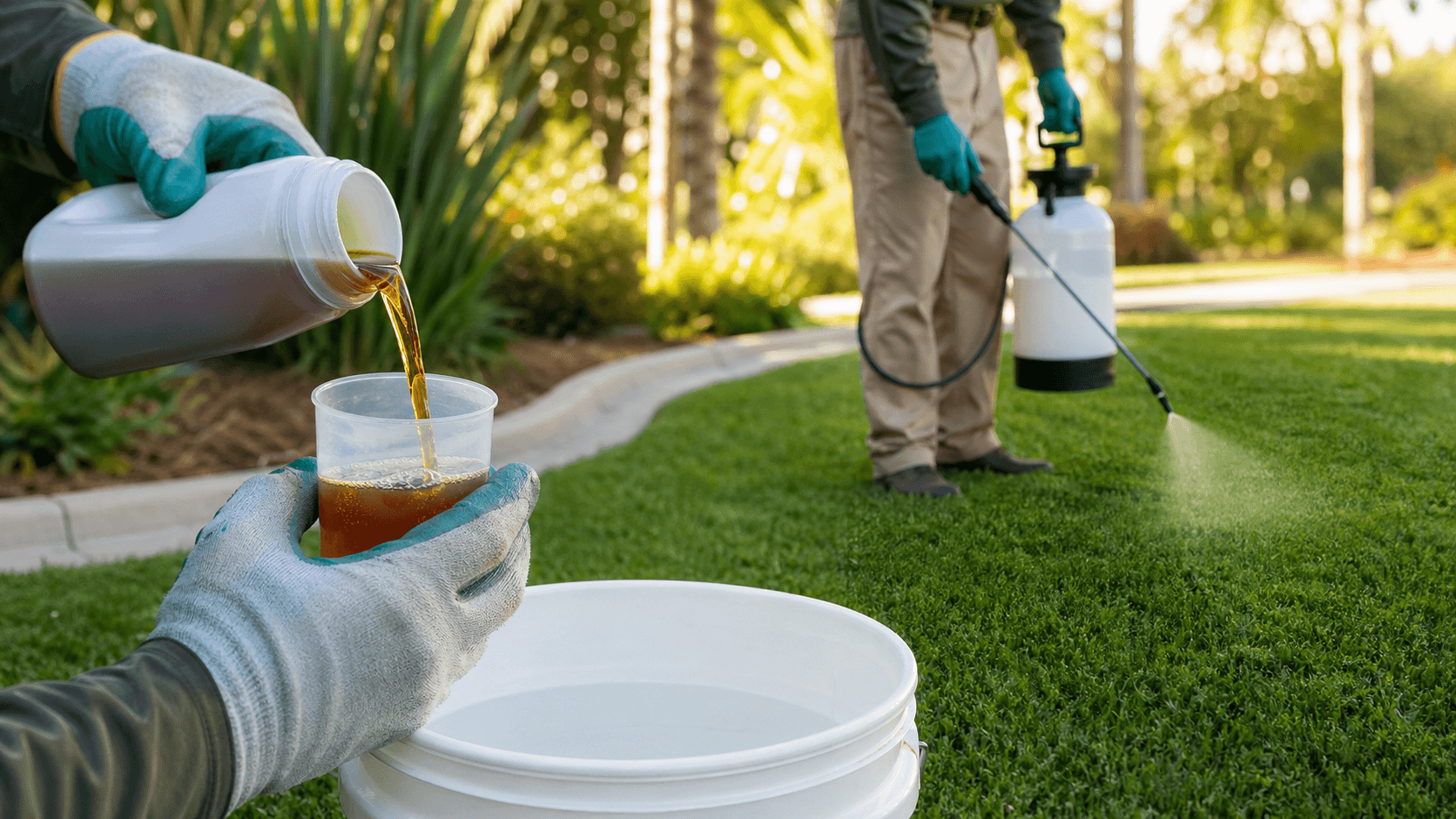
Start with dilution. Follow the label on the product and mix the recommended amount into water. You can use a hose-end sprayer, pump sprayer, or backpack sprayer, as long as you can move at a steady pace and keep coverage even. The biggest mistakes are spraying too heavily in one area and too lightly in another, which shows up as uneven color.
For best timing and conditions:
- Apply in early morning or late afternoon when temperatures are cooler and the sun is less intense.
- Avoid spraying in the hottest part of the day, especially during heat waves.
- Skip applications right before a heavy rain, which can wash material off the leaves before it has time to be absorbed.
Liquid seaweed plays well with other products. Many lawn managers use it alongside granular fertilizers, soil amendments like lime or gypsum, and micronutrient blends. When combined thoughtfully, it can help the grass pull more value from every product you are already using, which often allows you to maintain or improve results without constantly increasing synthetic fertilizer rates.
Smarter Bermuda Lawn Care with Less Fertilizer and More Life
When we talk about the best fertilizer for Bermuda grass, we are really talking about a system, not just a high-nitrogen bag. The most reliable results come from a balanced program that feeds the plant and the soil, respects what your soil test shows, and avoids the waste and side effects that come from overdoing synthetic products.
Liquid seaweed lawn care is a natural way to intensify turf health, color, and stress tolerance without leaning harder on chemicals. For home lawns that need to look good all season, and for high-visibility turf like sports fields and golf-course fairways, that balance matters. By combining sound fertilizer choices, good timing, and premium liquid seaweed from sources like our Maine-harvested BioXtreme extracts, you can grow a greener, tougher Bermuda lawn that relies more on healthy soil life and less on heavy synthetic inputs.
Transform Your Lawn With Seaweed-Powered Nutrition
Discover how our science-backed liquid seaweed lawn care can help you build a healthier, more resilient yard from the roots up. At BioXtreme, we focus on natural performance so you can see stronger growth, richer color, and better stress tolerance season after season. If you have questions or want help choosing the right approach for your property, contact us and we will walk you through the next steps.